ChatGPT vs Claude vs Gemini: Which AI Is Best in 2026?
ChatGPT vs Claude vs Gemini in 2026: compare the latest models, independent benchmark results, writing, coding, research, pricing, and features to find the best AI.

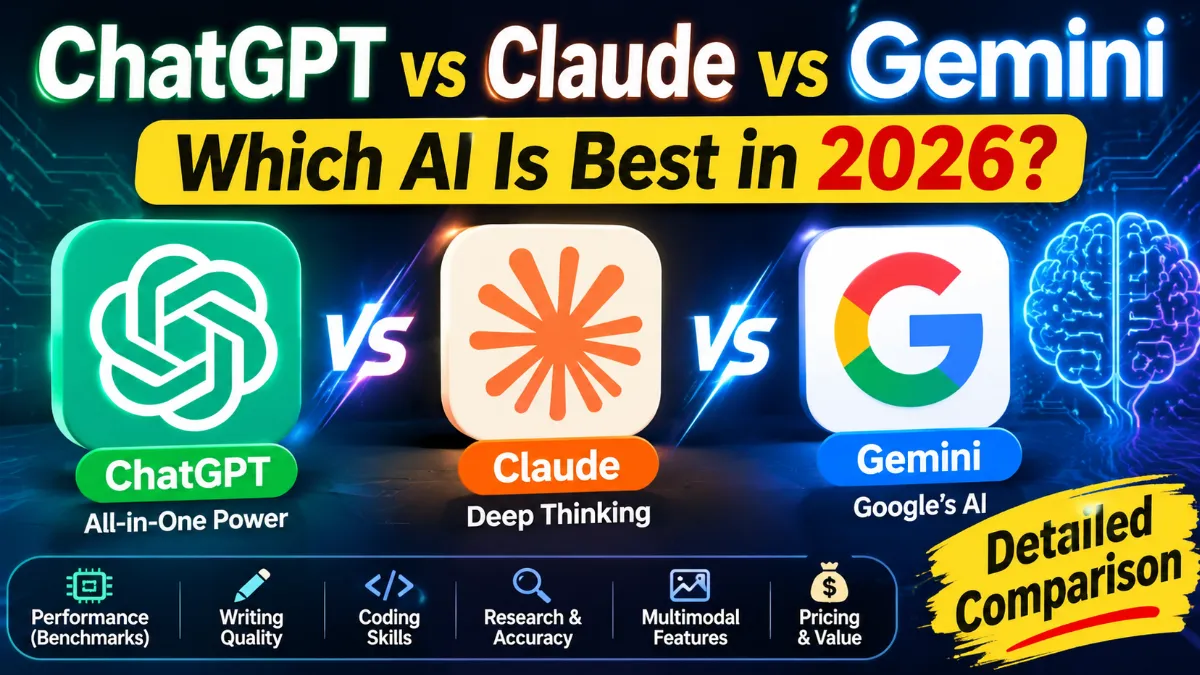
Choosing an AI assistant in 2026 is no longer as simple as picking the chatbot with the most impressive answers. ChatGPT, Claude, and Google Gemini have all developed into powerful platforms for writing, coding, research, document analysis, and everyday productivity.
But which one is actually better?
The answer depends on what you need. A model that performs exceptionally well on a coding benchmark may not be the best choice for writing an article or researching a complicated topic. Pricing, usage limits, available tools, and model access also matter.
For this comparison, we reviewed the latest official product announcements, published independent benchmark results, feature documentation, and subscription information available on November 18, 2026. We also examined how the three platforms position their latest models for different types of work.
This is a research-based comparison, not a hands-on test. We did not run the same prompts through all three platforms. Instead, we analyze published evaluation results and documented features, identifying where the available evidence is strong and where direct testing would still be necessary.
Quick Verdict: Which AI Should You Choose?
There is no single winner for every user. Each platform has a different combination of strengths.
Your priority | Recommended choice | Why |
|---|---|---|
General everyday assistance | ChatGPT | Broad set of tools and a flexible assistant experience |
Writing and document work | Claude | Strong professional writing and document-focused features |
Google ecosystem and everyday AI access | Gemini | Integration with Google products and broad model availability |
Advanced coding and technical work | Depends on the model and task | Published benchmarks show different winners across coding tests |
Image creation and editing | ChatGPT | Integrated image generation and editing capabilities |
Long-context document analysis | Compare the available model tiers | All three offer substantial document and context capabilities, but limits vary |
Our overall recommendation: ChatGPT is a strong all-round choice, Claude is particularly compelling for professional writing and coding workflows, and Gemini is attractive for users who already rely on Google services.
That does not mean one platform is objectively better in every category. The benchmark evidence below explains why.
1. The Latest AI Models in November 2026
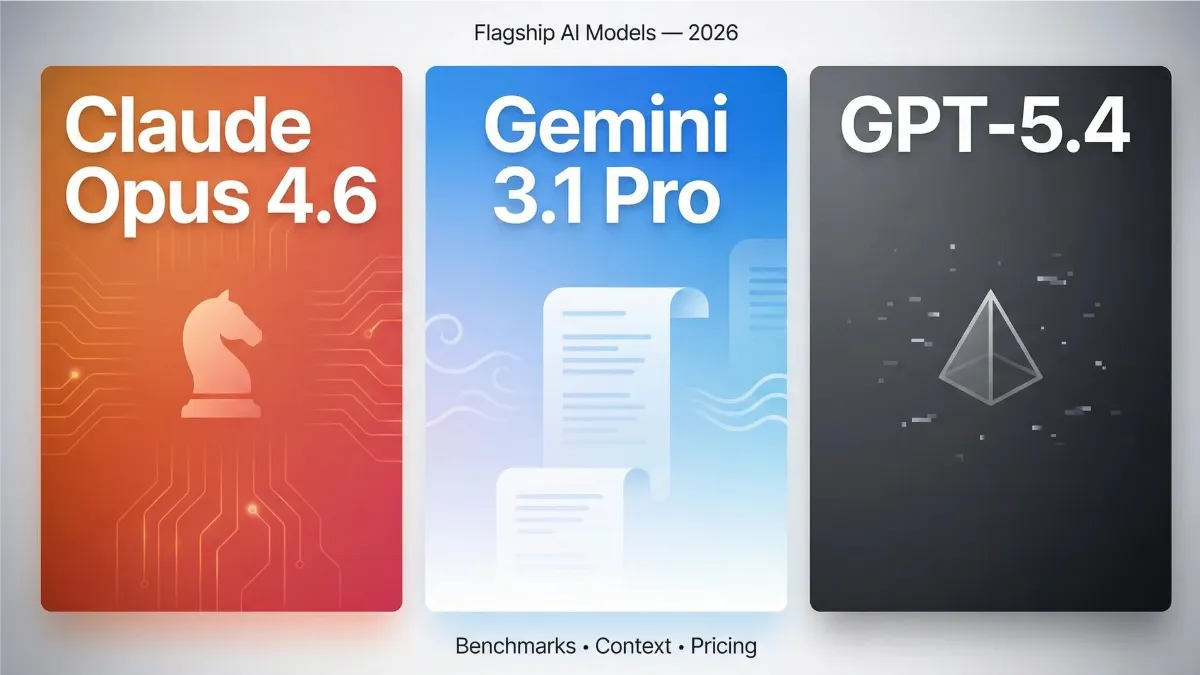
Before comparing performance, it is important to understand which models are actually available.
AI companies frequently release new models, but a newly announced model is not necessarily available to every user or in every version of the product.
ChatGPT: GPT-6 and the GPT-6.2 Work Models
OpenAI introduced GPT-6 in October 2026, bringing improved reasoning and a more interactive ChatGPT experience.
On November 17, OpenAI announced GPT-6.2 Astra and GPT-6.2 Sol for ChatGPT Work and the API. These models focus on professional work, coding, and tasks that combine text, images, and tools.
There is an important distinction: OpenAI's November 17 announcement does not mean GPT-6.2 has replaced the regular ChatGPT models for every user. Availability depends on the product experience and account access.
ChatGPT also offers a broader set of tools, including voice conversations, file analysis, image generation, and Deep Research features where available.
What this means: ChatGPT is not just a model. It is a platform that combines AI models with productivity and creative tools.
Claude: Fable 5.2, Opus 5.5, Sonnet 5.5, and Haiku 5.5
Anthropic has continued expanding its Claude model family.
Its November 9 announcement introduced Claude Fable 5.2 and Claude Mythos 5.2, aimed at demanding technical work, coding, finance, and scientific tasks.
Other models include:
Claude Opus 5.5: Designed for advanced coding and professional knowledge work.
Claude Sonnet 5.5: A balance of capability, speed, and cost.
Claude Haiku 5.5: Focused on faster, high-volume tasks.
Access to the newest Claude models can depend on the subscription, usage credits, and availability. Do not assume every Claude user receives the same model access.
What this means: Claude offers a model family suited to different workloads, from faster everyday assistance to more demanding technical work.
Gemini: Hydrogen, Argon, and Carbon
Google's Gemini 4 family has three particularly important models:
Gemini 4 Hydrogen: Designed for faster everyday and agentic workflows, with broad availability across Gemini products.
Gemini 4 Argon: A frontier reasoning model for complex coding, scientific problems, and multi-step work.
Gemini 4 Carbon: Google's more advanced model for demanding technical, scientific, and long-running agentic tasks.
Google introduced Gemini 4 Hydrogen on November 12, 2026. It also announced Gemini 4 Carbon availability on November 10, following the earlier release of Argon.
Access differs by model and plan. Hydrogen has broader availability, while Argon and Carbon have more restricted access depending on the product and subscription.
What this means: Gemini's model lineup gives users different options depending on whether they prioritize speed, advanced reasoning, or demanding technical work.
2. Independent Benchmark Results: What Do the Numbers Say?
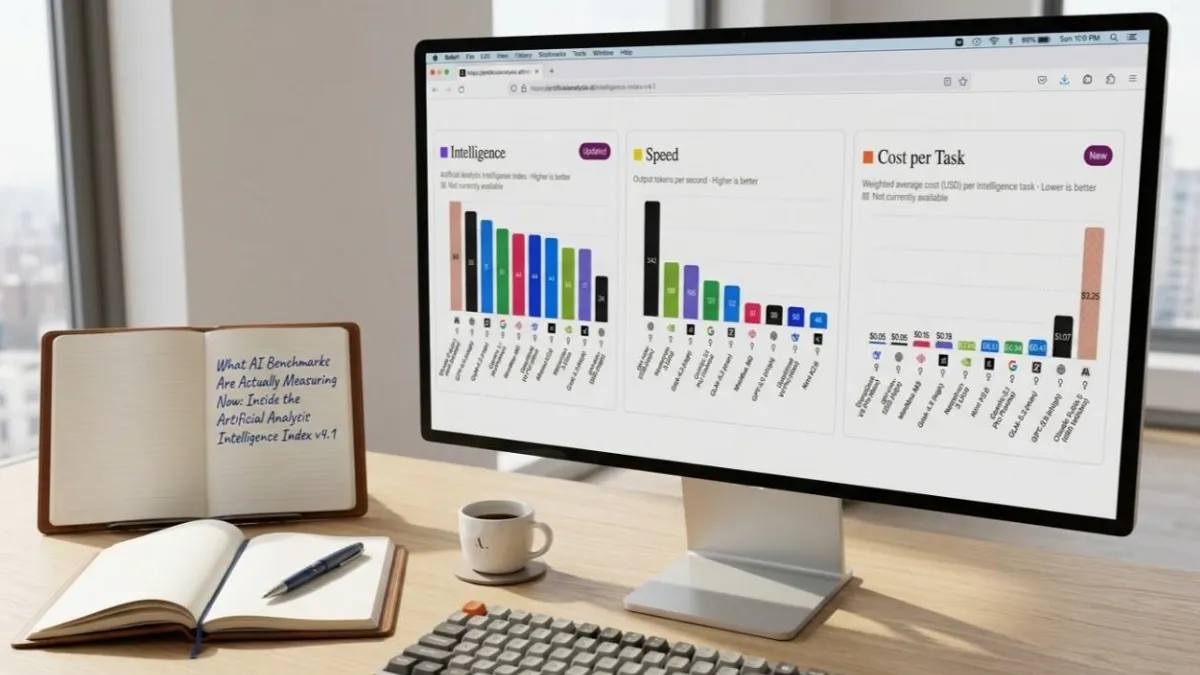
Benchmark results are useful because they provide measurable evidence of model performance. However, a benchmark score should not be treated as a complete measure of how useful an AI assistant will be in everyday life.
One relevant independent source is the Artificial Analysis Intelligence Index. Its version 5 evaluation, reported in a November 11, 2026 leaderboard snapshot, provides the following scores:
Model | Company | Intelligence Index v5 |
|---|---|---|
Claude Fable 5.2 | Anthropic | 64.6 |
Gemini 4 Carbon | 60.0 | |
Claude Opus 5.5 | Anthropic | 59.1 |
GPT-6 Astra | OpenAI | 56.9 |
GPT-6.1 Sol | OpenAI | 54.6 |
Claude Sonnet 5.5 | Anthropic | 54.5 |
GPT-6.1 Terra | OpenAI | 51.3 |
Gemini 4 Argon | 50.4 |
Important: These are model-level benchmark scores, not scores for the entire ChatGPT, Claude, or Gemini apps. They are also a dated snapshot, not a permanent ranking. The benchmark's version 5 replaced version 4.3 with a new set of evaluations, so scores from those two versions should not be compared directly.
What can we learn from these results?
Claude leads this particular snapshot. Claude Fable 5.2 has the highest listed score, followed by Gemini 4 Carbon and Claude Opus 5.5.
Google is competitive at the top end. Gemini 4 Carbon's score places it ahead of GPT-6 Astra in this evaluation.
OpenAI remains competitive. GPT-6 Astra and GPT-6.1 Sol both appear among the listed models, but neither leads this particular ranking.
The key lesson is that the benchmark does not support the claim that one company wins everything. It shows that different models occupy different positions in a particular evaluation.
A higher overall score does not automatically mean better writing, fewer factual mistakes, faster answers, or better value for money.
3. Writing Quality: Which AI Produces Better Content?
Writing quality is more than grammar. A useful writing assistant should understand the intended audience, organize information clearly, maintain a consistent tone, and avoid repetitive or unsupported claims.
ChatGPT
ChatGPT is a flexible writing assistant for blog posts, emails, outlines, summaries, social media content, and editing.
Its advantage is the combination of writing with other tools. A user can develop an outline, analyze supporting documents, generate images, and revise the final content within one platform.
However, users should still review factual claims, sources, and repetitive language before publishing.
Claude
Claude is a strong option for people who work with long documents, detailed drafts, and professional writing.
Its Projects and document-related features can help organize ongoing work. It is also worth considering when the goal is to improve clarity, structure, tone, or consistency across a lengthy document.
Claude's writing style may suit users who prefer detailed and carefully structured responses.
Gemini
Gemini can help with drafting, summarization, research, and productivity tasks, particularly when users work with Google services.
Its value becomes more noticeable when writing is part of a larger workflow involving documents, email, and other Google products.
Writing verdict: Claude is a compelling choice for editing and document-heavy work. ChatGPT is a flexible all-round writing assistant, while Gemini is useful for people who want writing connected to Google's ecosystem.
There is no independently verified, universal writing score here that proves one platform is best for every writing task.
4. Coding and Software Development

Coding is one of the most competitive areas in AI development. A model may be good at explaining code but struggle with debugging, repository-level changes, or completing a multi-step engineering task.
What the benchmark evidence shows
Google's published Gemini 4 launch comparisons include Terminal-Bench 4.0 results for several models:
Model | Terminal-Bench 4.0 |
|---|---|
Claude Opus 5.5 | 66.4% |
GPT-6 Astra | 58.2% |
Gemini 4 Argon | 57.4% |
These figures are from Google's published comparison. They should be understood as results from that evaluation setup, not a guarantee that Claude will outperform the others in every coding environment.
Other coding benchmarks can produce different winners. A comparison published by a model developer may also use its own testing setup, so results should be interpreted with care.
ChatGPT for coding
ChatGPT can help explain code, debug errors, generate functions, review logic, and work with development tools. OpenAI's GPT-6.2 Work models are also designed for more demanding coding and professional workflows, subject to access.
Claude for coding
Claude is particularly worth considering for developers who work with larger codebases, terminal workflows, and multi-step programming tasks. Claude Code is an important part of its developer offering.
Gemini for coding
Gemini 4 Argon and Carbon target complex engineering workflows, while Hydrogen is designed for faster everyday and agentic tasks. Google also connects Gemini with its developer ecosystem, including AI Studio and Antigravity.
Coding verdict: Claude Opus 5.5 leads the cited Terminal-Bench 4.0 comparison. However, Gemini and OpenAI models remain competitive in other evaluations and workflows. Developers should select based on the type of coding task, model access, and their preferred development environment.
5. Research, Accuracy, and Factual Reliability
A good research assistant should do more than produce a confident answer. It should find relevant information, distinguish reliable sources from weak ones, identify uncertainty, and make it possible to verify important claims.
ChatGPT
ChatGPT offers web search and Deep Research features where available. These can help users explore a topic, organize information, and review sources.
Its main advantage is the ability to combine research with writing, file analysis, and other productivity tools.
Claude
Claude supports web search and Research features on eligible plans. It can be useful for analyzing long documents and organizing complex information.
Users should still verify important facts against original sources rather than relying entirely on a generated summary.
Gemini
Gemini combines Google's AI ecosystem with access to Google Search-related experiences and research tools. This can be useful when a task involves finding current information and working with Google services.
Research verdict: All three can assist with research, but none should be treated as an automatic fact-checking authority. For important claims, check the original source, publication date, and supporting evidence.
A useful research workflow is to ask the AI for sources, open those sources yourself, and confirm that the cited material actually supports the answer.
6. Image Generation, Voice, and Multimodal Features
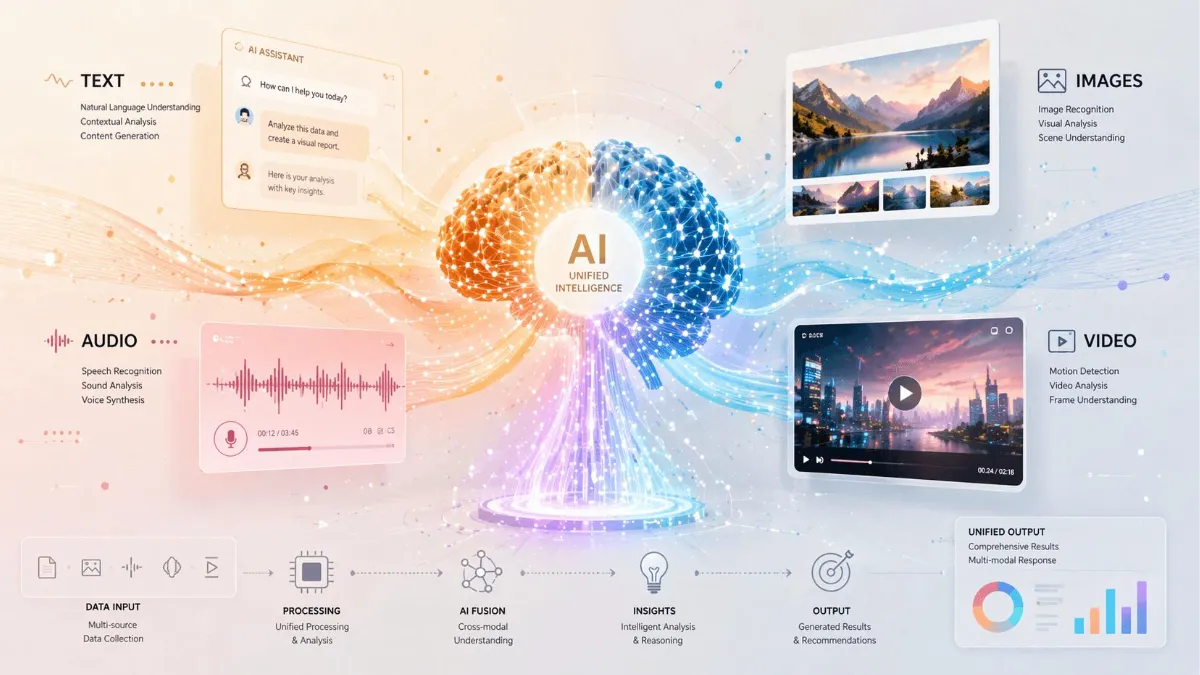
Modern AI assistants increasingly support more than text. They can work with images, files, voice, and other types of input.
ChatGPT
ChatGPT offers image generation and editing, voice conversations, file uploads, and analysis tools. OpenAI introduced ChatGPT Images 2.6 in November 2026, with improvements to image creation and editing.
This makes ChatGPT a useful option for people who want writing, visual creation, and conversational tools in one place.
Claude
Claude supports image understanding, voice mode, file creation, and document-oriented workflows. Its strengths are more focused on working with information and producing useful artifacts than on being a dedicated image-generation platform.
Gemini
Gemini supports multimodal interactions and connects with Google's broader AI products. Its model family and product features are designed to support text, images, and complex workflows.
Multimodal verdict: ChatGPT is a strong all-in-one option for users who want image generation, editing, and voice in the same assistant. Gemini is a strong alternative for users who prefer Google's connected AI ecosystem. Claude is useful for document and information workflows.
Feature availability can vary by region, plan, and rollout.
7. Long Documents and Context Windows
Context windows matter when an AI needs to process large documents, long conversations, codebases, or multiple files.
A larger context window can be helpful, but it does not automatically guarantee that a model will understand every detail accurately.
Claude's current model lineup advertises context windows of up to 1 million tokens, depending on the model and access conditions. Google also documents a 1 million-token input-output limit for Gemini 4 Argon through its API.
ChatGPT's available context and file limits depend on the model and product experience.
For users, the practical questions are:
Can the AI accept the documents you need to analyze?
Does it retain important details throughout a long task?
Can it cite or point back to the relevant source material?
Does the plan impose file, message, or usage limits?
Context verdict: Claude and Gemini have clearly documented million-token capabilities in parts of their model lineups. But context size alone is not enough to declare a winner. Real document accuracy and retrieval quality matter just as much.
8. Pricing: Which AI Offers Better Value?
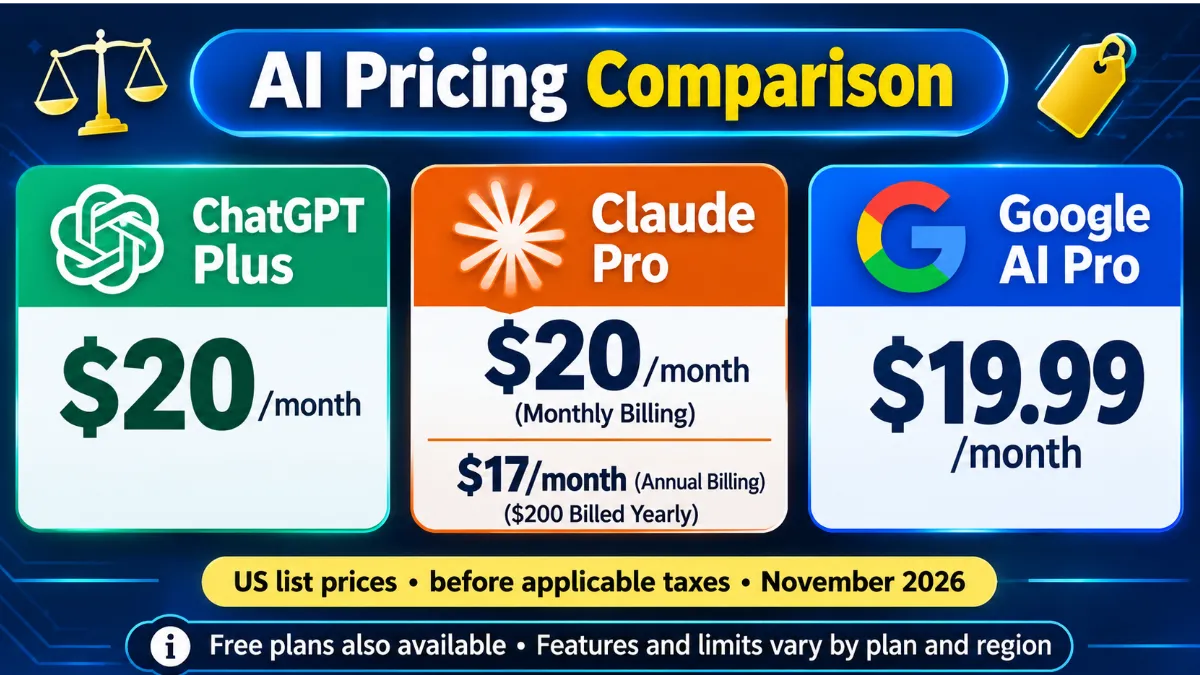
For many users, price is as important as performance. The following figures are US-listed individual subscription prices checked against official product pages in November 2026.
Platform | Free option | Main paid plan | Higher-tier options |
|---|---|---|---|
ChatGPT | Yes | Plus: $20/month | Pro options available |
Claude | Yes | Pro: $20/month monthly, or $200/year | Max: from $100/month |
Google Gemini | Yes | Google AI Pro: $19.99/month | Google AI Ultra available |
ChatGPT pricing
ChatGPT Plus costs $20 per month in the United States. It provides broader model access, higher usage limits, voice, image generation, file analysis, and Deep Research features where available.
API usage is billed separately and is not included in the Plus subscription.
Claude pricing
Claude Pro costs $20 per month when billed monthly, or $200 for an annual subscription. Higher-usage Max plans start at $100 per month.
Access to some advanced models and features can depend on usage credits and plan limits.
Gemini pricing
Google AI Pro is listed at $19.99 per month in the United States. Google AI Ultra provides higher access to advanced Gemini models and features.
Google's plans also bundle storage and other Google services, so the value is not limited to the chatbot itself.
Pricing verdict: The three main paid plans are close in headline price. The better value depends on which features you will actually use, how quickly you reach usage limits, and whether you already use the associated ecosystem.
Prices, taxes, billing options, and feature availability can differ by country. Check the official pricing pages before subscribing.
9. Privacy and Data Controls
Privacy is an important consideration when using AI for personal, professional, or business information.
Before uploading sensitive documents, users should understand each service's data controls, retention practices, and account settings.
Consider these questions:
Can you control whether your conversations are used to improve models?
What happens to uploaded files and conversation history?
Are different privacy controls available for personal and business accounts?
Does your organization require specific security or compliance protections?
ChatGPT, Claude, and Gemini provide different privacy settings and business offerings. Their policies and controls are not identical, and they can change over time.
For confidential business data, do not assume that a personal subscription provides the same protections as a business or enterprise plan. Read the relevant privacy documentation and organization terms before sharing sensitive information.
Privacy verdict: There is no responsible universal winner without considering the account type, settings, and data being shared. Review the official privacy documentation for the exact plan you intend to use.
10. Which AI Is Best for Different Types of Users?
Instead of asking which AI is the best overall, consider the work you need it to do.
Students and everyday users
ChatGPT and Gemini are both strong general-purpose choices. Gemini may be especially convenient for people who already use Google's products, while ChatGPT offers a broad set of tools in one interface.
Bloggers and content creators
Claude is worth considering for editing, long-form writing, and document work. ChatGPT is useful for combining outlines, research, drafting, and image creation.
For SEO content, neither tool should be allowed to publish unverified claims automatically. Human editing, original insight, and source verification remain essential.
Software developers
Claude is a strong option for terminal-based and multi-step coding workflows. ChatGPT offers coding assistance and developer tools, while Gemini has a growing focus on agentic engineering workflows.
The best choice depends on your coding environment and the benchmark or task most relevant to your project.
Researchers and professionals
All three platforms can help with research and document analysis. Compare their source quality, file handling, available research tools, and access limits before choosing.
Google Workspace users
Gemini is a natural option to consider if your daily work already happens in Gmail, Docs, Sheets, and other Google services.
11. Limitations: What These AI Assistants Still Get Wrong
Even the most advanced AI models have limitations.
They can produce incorrect information. A fluent answer is not necessarily a correct answer. Verify important claims.
Benchmark results do not predict every task. A model that performs well on a coding benchmark may not be the best choice for creative writing or document analysis.
Paid plans have usage limits. A subscription does not always mean unlimited access to every model or feature.
Access differs across products. A model announced for an API or professional workspace may not be available in the standard consumer chat experience.
AI-generated content needs human judgment. Users should review important writing, code, research, and business decisions before relying on them.
These limitations do not make the tools useless. They explain why choosing an AI assistant should involve more than looking at a leaderboard.
12. Final Verdict: ChatGPT vs Claude vs Gemini in 2026
So, which AI is best in 2026?
The evidence points to three strong platforms with different advantages.
Choose ChatGPT if you want a flexible assistant that combines writing, research, voice, image generation, file analysis, and productivity features.
Choose Claude if your work involves professional writing, long documents, coding, or structured knowledge work. Its Fable 5.2 result also leads the cited Artificial Analysis Intelligence Index v5 snapshot, although that does not make Claude the winner of every task.
Choose Gemini if you use Google's ecosystem or want access to its growing range of models, from everyday Hydrogen workflows to more advanced Argon and Carbon capabilities.
Our overall recommendation
For most people who want one general-purpose AI assistant, ChatGPT is a sensible starting point because of its broad feature set.
For writing and coding-heavy work, Claude deserves serious consideration. For Google-focused productivity and multimodal workflows, Gemini is a strong alternative.
The most useful conclusion is not that one AI has won. It is that the best choice depends on your workflow, budget, and the specific model you can access.
Before paying for a subscription, try the free versions with the same tasks you perform regularly. Compare the quality of the answers, the time saved, the usage limits, and how often you need to correct the output.
That will tell you more about the right AI for your work than a single leaderboard score.
Frequently Asked Questions
Is ChatGPT better than Claude in 2026?
Not for every task. ChatGPT offers a broad set of general-purpose tools, while Claude is a strong option for professional writing, document work, and coding. Published benchmark results also vary by evaluation.
Is Gemini better than ChatGPT?
Gemini may be a better fit for people who use Google services extensively. ChatGPT offers a broad collection of writing, voice, image, file, and research tools. The better choice depends on the user's needs.
Which AI has the highest benchmark score in November 2026?
In the November 11 Artificial Analysis Intelligence Index v5 snapshot reviewed for this article, Claude Fable 5.2 scored 64.6, followed by Gemini 4 Carbon at 60.0 and Claude Opus 5.5 at 59.1. These are model-level results from one benchmark index, not universal rankings.
Which AI is best for coding?
Claude Opus 5.5 leads the cited Terminal-Bench 4.0 comparison, but different coding benchmarks can produce different winners. Developers should compare models using tasks similar to their actual work.
Which AI is best for writing?
Claude is a compelling option for long-form editing and document-heavy work. ChatGPT is a flexible writing and content-production assistant, while Gemini is useful for Google-connected workflows. There is no universal writing winner established by the benchmark data cited here.
Are ChatGPT, Claude, and Gemini free?
All three offer free access, but free plans have limits. Paid subscriptions provide higher usage and additional features. Exact access depends on the plan, country, and product rollout.
Should I pay for all three AI subscriptions?
Most individual users do not need all three. Start with the platform that best fits your regular tasks. Consider another subscription only if it provides a clear benefit that your current tool cannot deliver.
Sources and Further Reading
The following sources were reviewed for model announcements, benchmark context, product features, and pricing. Model availability and prices can change, so check the official pages before making a subscription decision.
Official product and model information
Independent benchmark and comparison references
Official pricing information
Editorial note: This article analyzes published benchmark results and public product documentation. SamReview did not independently run controlled, side-by-side tests of the three platforms for this comparison. Benchmark scores reflect the cited source and evaluation date, not a permanent ranking.
✍️ More from Nil Ratan Karmakar

How to Use ChatGPT for Free (2026): Complete Beginner's Guide
Claude AI Review 2026: Features, Pricing, Claude Code & Real-World Limitations
ChatGPT Review 2026: Features, Pricing, GPT-6, Pros & Cons – Is It Worth Using?
Best VPN Services in 2026: NordVPN vs ExpressVPN vs Surfshark vs Proton VPN vs Mullvad
DeepSeek V4.1 Flash Review (2026): Is This 1M-Context AI Model Worth Using?
Reviews & Comments (0)
No comments yet. Be the first to share your thoughts!
Nil Ratan Karmakar
Nil Ratan Karmakar is a Software Specialist and Senior Reviewer at SamReview. With over 8 years of dedicated experience in the software industry, he specializes in testing and analyzing SaaS platforms, productivity tools, AI software, and mobile applications. Before joining SamReview, Nil worked as a software analyst, where he developed a deep understanding of user experience (UX), software architecture, and performance optimization. He is passionate about helping users find the right software solutions to boost their productivity and workflow. Outside of reviewing software, Nil enjoys exploring new tech trends and contributing to open-source projects.
Read Next
View All →
Best Laptops for Programming in 2026: Black Friday Deals, Prices & Reviews
Find the best laptops for programming in 2026 with Black Friday prices, regular price comparisons, savings, specifications, pros and cons.

Best Budget Laptops Under $500 in 2026
Find the best budget laptops under $500 in 2026. Compare Acer, ASUS, Lenovo and Chromebook options, with pros, cons and buying advice.

Best Laptops for College Students in 2026: 7 Top Picks
Find the best laptops for college students in 2026. Compare MacBooks, Windows laptops and Chromebooks for budget, battery life, engineering, and everyday study.

Best Black Friday TV Deals 2026: 7 TVs Worth Buying, Reviews
Find the best Black Friday TV deals 2026. Compare LG, Samsung and Sony OLED, QLED and Mini LED TVs, prices, pros, cons and buying options.