
Breaking News & Latest Updates from the Tech World
Elon Musk Spent Nearly $500 Million on the Midterms and Lost Big — Now His AI Empire Faces a New Threat
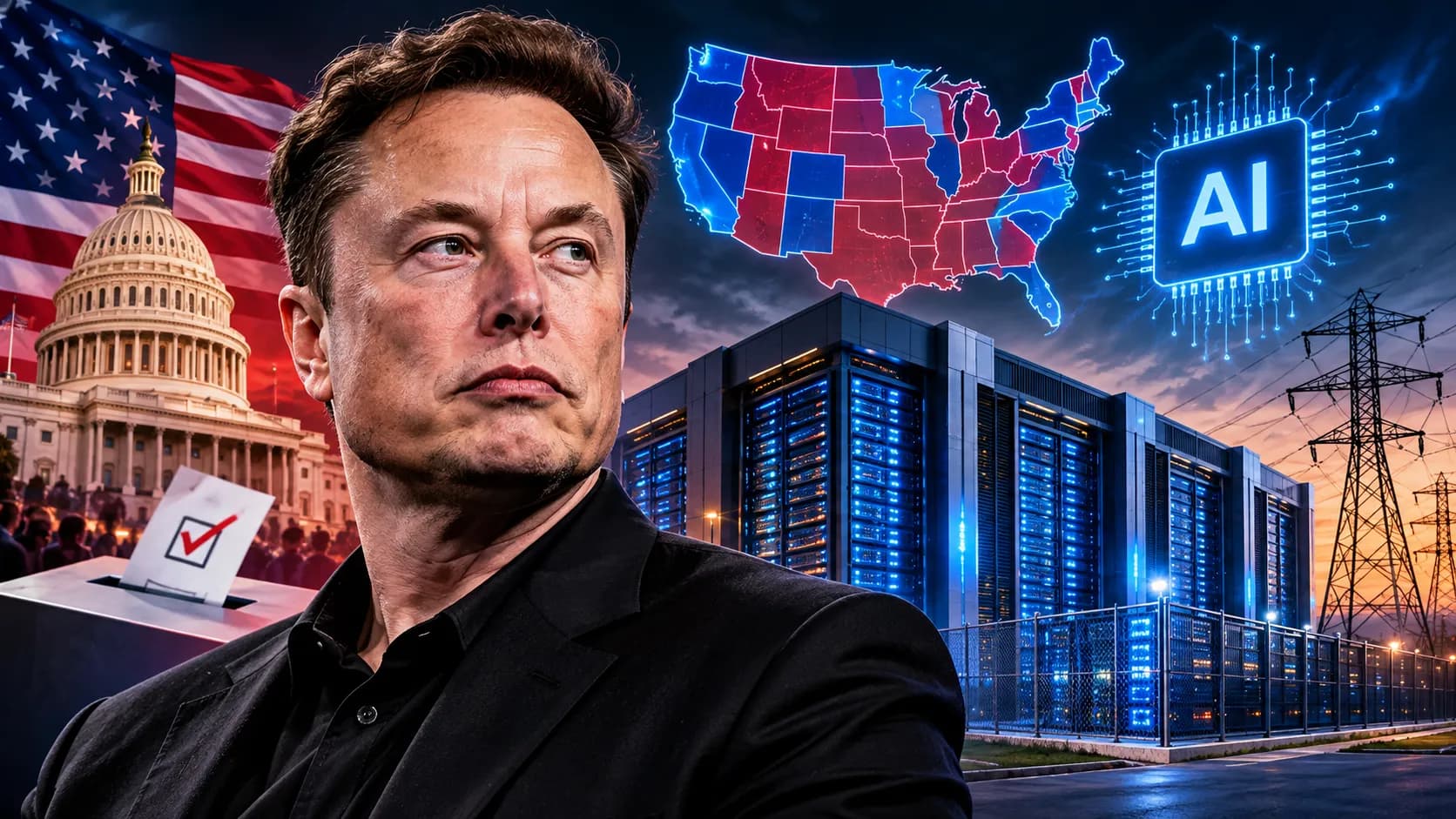
Elon Musk invested nearly half a billion dollars in the 2026 US midterm elections, hoping to strengthen Republican political influence. But the results delivered a major setback. Democrats made significant gains, Texas changed political direction, and communities across the country pushed back against large AI data center projects. Now, Musk's growing AI ambitions face a new challenge that money alone may not solve.

1. Introduction: When Nearly Half a Billion Dollars Cannot Buy Political Influence
Elon Musk is used to making headlines through ambitious technology projects, controversial public statements and extraordinary business decisions.
But the 2026 US midterm elections have created a different kind of headline for the billionaire entrepreneur.
Musk reportedly spent approximately $474 million supporting Republican candidates and political organizations during the election cycle. It was one of the largest individual political spending efforts in modern US election history.
Despite that enormous financial commitment, the election results went against many of the candidates and political interests he supported.
Democrats made major gains, took control of both chambers of Congress and won several important races. Texas also elected Democrat Gina Hinojosa as governor, ending more than three decades of Republican control of the governor's office.
For Musk, this is more than a political embarrassment.
His business empire has become increasingly dependent on government relationships, regulatory approvals, energy infrastructure and favorable business conditions.
Most importantly, his artificial intelligence ambitions require enormous amounts of electricity, land, cooling capacity and investment.
The political landscape that once helped support his expansion may now become significantly more complicated.
The bigger question is no longer how much money Musk can spend on politics. It is whether his AI infrastructure can continue expanding at the speed he wants.
2. The $474 Million Political Gamble
According to election campaign finance reporting, Musk contributed approximately $474 million to Republican political groups and candidates during the 2026 election cycle.
A substantial portion of that money went through political action committees, including:
America PAC: Approximately $216 million.
Senate Leadership Fund: Approximately $168 million.
Congressional Leadership Fund: Approximately $30 million.
Other political organizations and state-level efforts: Additional contributions.
These figures represent reported contributions and allocations, not necessarily the exact amount spent directly on individual advertisements or campaigns.
Musk's financial involvement extended beyond simply supporting Republican candidates.
He also used his social media platform, X, to encourage voters to support Republican candidates and publicly criticized several Democratic politicians.
However, the results were disappointing for many of the candidates he supported.
Some of the most important defeats occurred in Texas, Maine, Ohio, Michigan and other competitive races.
In Texas, Democratic candidate James Talarico defeated Republican Ken Paxton in the closely watched Senate contest, while Gina Hinojosa defeated Republican Greg Abbott in the governor's race.
These outcomes were particularly significant because Texas has become an important center for Musk's business operations.
Did Musk Actually Lose All That Money?
Not exactly.
Political contributions do not work like conventional business investments. A political donor does not receive a guaranteed financial return, and losing an election does not mean every dollar contributed was wasted.
However, the election results demonstrate that even extraordinary financial resources cannot guarantee voter support.
WIRED's election analysis reported that more than 99 cents of every traceable dollar Musk directed toward decided races went to candidates who lost.
Engadget also reported that most of the candidates supported by Musk had not won their races at the time of publication.
The results provide a clear example of the limitations of billionaire political influence.
Money can purchase advertising, organize campaigns and increase visibility.
But it cannot guarantee public trust.
3. Why Texas Is the Biggest Problem for Musk
Among all the election results, Texas may have the most direct implications for Musk's business empire.
Over the past several years, Texas has become a central location for his companies.
His business interests in the state include:
Tesla's major manufacturing operations.
SpaceX's Starbase launch complex.
Planned semiconductor and computing infrastructure.
AI-related data center expansion.
Large-scale energy and industrial development projects.
Texas has historically attracted technology companies through relatively business-friendly policies, tax incentives and opportunities for large industrial developments.
However, the election of Democrat Gina Hinojosa introduces a different political environment.
Hinojosa has proposed stronger community protections and a pause on new data center development until concerns about local infrastructure and environmental impacts are addressed.
She has also opposed certain tax incentives and a potential state-park land transaction connected to SpaceX's expansion plans.
This does not mean that all existing Musk projects will automatically be stopped.
But future projects may face additional political scrutiny, longer approval processes and more demanding conditions.
For a company investing billions of dollars in infrastructure, even relatively small delays can have significant financial consequences.
4. The Real Threat: America's Growing Backlash Against AI Data Centers
Perhaps the most important development from the election is not Musk's political defeat itself.
It is the growing opposition to large data center projects across the United States.
AI companies need enormous computing resources to train and operate advanced artificial intelligence models.
These resources require massive data centers containing thousands of specialized processors, networking equipment and cooling systems.
As AI adoption accelerates, companies are competing to build larger computing facilities.
But local communities are increasingly questioning the consequences.
Electricity Consumption
AI data centers can consume enormous amounts of electricity.
When large facilities connect to regional power grids, local residents worry about whether additional infrastructure costs will eventually affect household electricity bills.
This concern has become especially important in communities where electricity demand is already increasing.
Water Consumption
Many data centers require substantial cooling infrastructure.
Depending on the cooling technology, water consumption can become a major issue, particularly in areas experiencing water shortages or drought conditions.
Noise and Environmental Pollution
Large facilities can create continuous noise from cooling systems, backup generators and industrial equipment.
Some facilities also rely on natural gas turbines or other on-site power generation systems.
These arrangements can raise concerns about air quality, pollution and environmental permits.
Community Control
Residents increasingly want a say in whether large data center projects are approved in their communities.
They are asking important questions:
Who pays for new electricity infrastructure?
How much water will these facilities consume?
Will local residents receive meaningful economic benefits?
What happens to the environment?
Should communities have the right to reject large developments?
These questions are becoming central to the political debate surrounding artificial intelligence.
According to election reporting, dozens of local ballot measures addressed data center development during the 2026 election cycle.
Many communities supported restrictions, temporary construction moratoriums or other measures designed to limit large facilities.
This indicates that resistance to data center expansion is no longer limited to environmental organizations or technology critics.
It has become a broader community and political issue.
5. Why This Matters for xAI and Grok
Musk's artificial intelligence ambitions are closely associated with xAI and its flagship AI platform, Grok.
Unlike companies that primarily develop software and rely heavily on external cloud providers, Musk has pursued a strategy that places enormous emphasis on building and controlling computing infrastructure.
The objective is straightforward:
More computing capacity can support larger AI models, faster development cycles and more powerful AI services.
But this strategy also creates a significant dependency.
An AI company can develop an excellent model and still struggle if it cannot secure enough computing infrastructure.
The Colossus data center complex near Memphis, Tennessee, has become a central part of Musk's AI computing strategy.
The company has also pursued further expansion through Colossus II and additional infrastructure projects.
These facilities are designed to support demanding AI workloads, including training and operating advanced Grok models.
However, the infrastructure comes with considerable challenges.
The company needs reliable electricity, specialized chips, cooling systems, networking equipment and regulatory approval.
Any disruption to those resources can increase costs and slow development.
For Musk, the election results create another layer of uncertainty.
A more critical political environment could increase scrutiny of how AI companies obtain electricity, operate industrial facilities and manage environmental responsibilities.
6. The Colossus Controversy: AI Growth Meets Environmental Concerns
Musk's AI infrastructure has already faced criticism from communities near its large computing operations.
The Colossus facilities near Memphis have attracted attention because of their enormous energy requirements.
One particularly controversial issue involves natural gas turbines used to provide electricity.
Environmental groups and local residents have raised concerns about air pollution and the potential health consequences of operating these systems near populated communities.
In another important development, a federal judge on October 30, 2026, rejected a motion to dismiss a lawsuit brought by the NAACP concerning turbines operating in Southaven, Mississippi.
The lawsuit alleges that the turbines require appropriate air permits and expose nearby residents to harmful pollution.
It is important to understand that rejecting a motion to dismiss does not mean the plaintiffs have already won the case.
It means the legal dispute can continue.
Nevertheless, the case demonstrates that large AI infrastructure projects can face legal challenges even when companies have already invested heavily in development.
This creates a potentially expensive problem for AI companies.
They may need to spend more money on environmental compliance, alternative energy arrangements, legal defense and community engagement.
7. Can Political Changes Slow Down Musk's AI Empire?
The answer is yes, but the impact will depend on how political and regulatory changes are implemented.
There are several possible challenges.
A. Slower Data Center Approvals
New political leadership may introduce additional review requirements for large computing facilities.
This could delay construction schedules and increase development costs.
For AI companies competing to secure computing capacity, time is extremely important.
A delayed facility may mean delayed revenue opportunities.
B. Reduced Tax Incentives
Large industrial developments frequently depend on favorable tax arrangements and government incentives.
If states reconsider these incentives, companies may need to invest more of their own capital.
That could make some projects less attractive.
C. Increased Environmental Regulation
More attention to electricity generation, water consumption and air pollution could force companies to modify their infrastructure plans.
This may increase operating expenses.
D. Congressional Investigations
A Democratic-controlled Congress could increase oversight of major technology companies and government relationships.
Musk's companies may face additional scrutiny concerning government contracts, regulatory decisions, public subsidies and other business activities.
However, political investigations are not the same as proven wrongdoing.
Their actual impact will depend on the evidence, legal authority and outcomes of any proceedings.
E. Growing Public Opposition
Perhaps the most difficult challenge is changing public opinion.
Even when a company receives regulatory approval, strong local opposition can create political pressure, lawsuits and construction delays.
For a company planning enormous facilities, public acceptance is becoming an increasingly important part of its business strategy.
8. Musk's Space Data Center Idea: A Real Solution or a Political Joke?
Following the election results, Musk posted on X:
"Data centers in space looking pretty appealing right now."
The comment attracted attention because SpaceX has long been associated with ambitious space infrastructure plans.
The idea of placing AI computing infrastructure in orbit is technically interesting.
Space-based data centers could potentially use solar energy and operate independently of some terrestrial land and infrastructure constraints.
However, this concept is far from a simple replacement for traditional data centers.
There are major engineering challenges.
Cooling
Space is extremely cold, but that does not mean computers can easily cool themselves.
In a vacuum, heat cannot be removed through ordinary air convection. Specialized thermal management and radiators would be required.
Maintenance
Traditional data centers can be repaired, upgraded and maintained by engineers.
Orbital computing infrastructure would make these operations significantly more complicated and expensive.
Launch Costs
Large-scale AI infrastructure requires enormous amounts of hardware.
Launching thousands of specialized processors, networking systems and supporting equipment into orbit would require substantial investment.
Connectivity
AI workloads require fast and reliable communication between processors and data storage systems.
Building an efficient orbital network would introduce additional technical and operational complexity.
Therefore, space-based AI infrastructure may become an interesting long-term possibility, but it is not an immediate solution to terrestrial data center challenges.
Musk's comment is best understood as a mixture of humor and a reference to his broader space ambitions rather than evidence of an imminent relocation of his AI infrastructure.
9. Our Analysis: Musk's Biggest Problem Is Infrastructure Dependency
In our assessment, the most important part of this story is the relationship between political influence and physical infrastructure.
Musk has built an unusual technology empire.
Tesla depends on manufacturing facilities, supply chains and energy infrastructure.
SpaceX depends on launch facilities, government relationships and regulatory approvals.
xAI depends on advanced chips, electricity, cooling systems and enormous computing capacity.
These businesses operate in different industries, but they share an important characteristic:
They depend heavily on the physical and regulatory environment in which they operate.
This makes political changes particularly important.
A software company can sometimes move its operations between cloud providers or regions relatively quickly.
A massive data center is different.
It requires land, electricity connections, construction permits, cooling infrastructure and long-term investment.
Once billions of dollars have been committed, moving a project elsewhere is not an easy decision.
That is why political resistance to AI data centers could become a more significant long-term threat than any individual election result.
The AI Industry Has Entered a New Phase
For years, the AI industry focused heavily on model performance.
Companies competed to build larger language models, improve reasoning capabilities and attract more users.
But the next stage of competition may depend increasingly on infrastructure.
Who can secure the most reliable electricity?
Who can obtain advanced chips?
Who can build data centers quickly?
Who can operate facilities without triggering major community opposition?
These questions may determine which companies can scale their AI products most effectively.
Musk has significant advantages, including access to capital, established businesses and SpaceX's technological capabilities.
However, those advantages do not eliminate the need for public support and regulatory cooperation.
Money Can Influence Politics, But It Cannot Eliminate Infrastructure Constraints
The election results offer an important lesson.
A billionaire can contribute enormous sums to political campaigns, but voters still make their own decisions.
Similarly, a technology company can invest billions in AI infrastructure, but it cannot automatically guarantee access to unlimited electricity, water or land.
The future of AI will depend not only on technological innovation but also on whether companies can develop infrastructure responsibly.
10. What Happens Next?
Several developments will be important to watch over the coming months.
Texas Data Center Policy
The new administration's approach to data center construction, tax incentives and environmental protections will be particularly important for Musk's Texas operations.
Colossus Expansion
Any changes to the construction schedule, electricity supply or environmental requirements could influence xAI's ability to expand computing capacity.
Federal Oversight
The new Congress may increase scrutiny of major technology companies and their relationships with government agencies.
AI Infrastructure Costs
Electricity, advanced processors, cooling systems and construction costs will remain major factors in the economics of AI.
Space-Based Computing
Musk's comments about orbital data centers may attract further attention, but the commercial and technical feasibility of such infrastructure remains uncertain.
These developments will help determine whether the political setbacks become a temporary inconvenience or a more substantial challenge to Musk's AI ambitions.
11. Final Verdict
Elon Musk's nearly $500 million political gamble did not deliver the results he wanted.
Democratic victories have changed the political environment in Washington and Texas, while communities across the country are increasingly demanding stronger controls over large AI data center developments.
For Musk, this creates a challenge that extends far beyond electoral politics.
His AI strategy depends on building and operating enormous computing facilities. Those facilities require electricity, land, water, permits and cooperation from local communities.
The growing backlash against data centers could make that expansion more expensive and difficult.
However, it would be premature to declare Musk's AI empire in decline.
xAI still has substantial infrastructure ambitions, SpaceX provides significant technological capabilities, and demand for AI computing remains strong.
The real test will be whether Musk can adapt his expansion strategy to a political and social environment that is becoming less willing to accept the costs of unchecked data center growth.
Our Final Takeaway:
The 2026 midterms may not stop Musk's AI ambitions, but they could change the conditions under which those ambitions are allowed to grow.
In the next phase of the AI race, computing power alone may not be enough.
The companies that succeed will also need affordable energy, regulatory cooperation and public trust.
Overall Assessment: A significant political and infrastructure warning for Musk's AI expansion, but not evidence that his AI business is collapsing.
Reviews & Comments (0)
No comments yet. Be the first to share your thoughts!
shahinur alalm
Expert reviewer and tech enthusiast at SamReview.